

Introduction
ādau śraddhā tataḥ sādhu-
saṅgo ’tha bhajana-kriyā
tato ’nartha-nivṛttiḥ syāt
“In the beginning one must have a preliminary desire for self-realization. This will bring one to the stage of trying to associate with persons who are spiritually elevated. In the next stage one becomes initiated by an elevated spiritual master, and under his instruction the neophyte devotee begins the process of devotional service. By execution of devotional service under the guidance of the spiritual master, one becomes free from all material attachment, attains steadiness in self-realization, …” Bg 4.10 purport.
This article explores the development from sraddha to nishtha, and sadhu sanga’s crucial role in that progression. If the sadhu sanga is of good quality, one’s initial faith becomes informed, proper faith. One can then adopt the devotional practices, or bhajana–kriya, for which one is eligible. At the initial stage of bhajana–kriya we still engage in materialistic activities which interrupt our bhajana. As we continue practising good sadhu sanga and appropriate bhajana kriya, we gradually become purified of the unwanted desires in our hearts that prevent us from being steady in our practice. This purification is called anartha nivritti. As our purification increases, so does the quantity and quality of our sadhu sanga and bhajana kriya. When sufficiently purified, we attain the stage of nishtha when we no longer interrupt our devotional service with illicit sense gratification. If the sadhu sanga is not good, our initial faith becomes misinformed, as does our bhajana kriya. This means we will not become purified of the unwanted things in our hearts, and thus never become truly sense-controlled, even after many years.
Below, we discuss what we understand to be the correct development of the stages of sraddha to nishtha, and where we think GBC policies surrounding initiation impede devotees’ healthy progression.
Sraddha
Sraddha, faith, starts as respectful curiosity regarding Krishna’s teachings:
“First of all, little faith. Just like many outsider also come here, “What these people are doing, these Kṛṣṇa consciousness men? So let us see.” So śraddhā. That is called śraddhā. Śraddhā, real śraddhā means complete faith.” Lecture 1973
“Śraddhā means respectful = “Oh, it is nice.” That is called śraddhā.” Lecture 1972
For this initial little faith to develop into complete faith, or in other words, properly informed faith, the spiritual candidate must be fortunate enough to associate with a bona fide spiritual master.
“Out of many millions of wandering living entities, one who is very fortunate gets an opportunity to associate with a bona fide spiritual master by the grace of Kṛṣṇa. By the mercy of both Kṛṣṇa and the spiritual master, such a person receives the seed of the creeper of devotional service.” CC Madhya 19.151 verse
We associate with the bona fide spiritual master by hearing from him:
“Hearing or associating with devotees is the most important function for self-realization.” Srimad Bhagavatam 3.25.27 purport
If one is fortunate enough to hear properly from a bona fide spiritual master, one’s faith becomes properly informed. In other words, one understands the actual goal and methodology of bhakti. This correct conception is called the bhakti-lata-bija.
“Ādau śraddhā. First of all, faith. That is the basic principle. And this word, śraddhā, has been described in the Caitanya-caritāmṛta by Kavirāja Gosvāmī, ‘śraddhā’-śabde—viśvāsa sudṛḍha niścaya kṛṣṇe bhakti kaile sarva-karma kṛta haya [Cc. Madhya 22.62]. This is called śraddhā, that “If I surrender to Kṛṣṇa, then all business of my life is done.” This is called śraddhā.” Lecture 1972
Without receiving the bhakti-lata-bija, the aspirant cannot progress properly through the stages of bhakti and may even fall away from the path.
“Now, the development of that faith is the process of Kṛṣṇa consciousness. There are three divisions of Kṛṣṇa conscious men. In the third class are those who have no faith. Even if they are officially engaged in devotional service, they cannot achieve the highest perfectional stage. Most probably they will slip, after some time. They may become engaged, but because they haven’t complete conviction and faith, it is very difficult for them to continue in Kṛṣṇa consciousness…..It is only by faith that one can advance in Kṛṣṇa consciousness. As far as the development of faith is concerned, one who is well versed in the literatures of devotional service and has attained the stage of firm faith is called a first-class person in Kṛṣṇa consciousness.” Bg 9.3 purport
Sadhu-sanga
Correct sadhu sanga requires that we associate with a first-class sadhu.
“Sādhu means pious, religious, honest person. Sādhu. Whose character is spotless, he’s called sādhu.” Lecture 1966
“Sādhu means honest, good-behaved. They are called sādhu. There is description of sādhu = sādhavaḥ sādhu-bhūṣaṇāḥ. ….[SB 3.25.21]…. Sādhu does not mean for livelihood change the color of the garment, … No. Sādhu means devotee. Sādhu means first-class devotee.” Lecture 1974
“One should take shelter of a pure devotee, who has nothing to do with this material world but is simply engaged in devotional service. By serving him only, one can transcend the qualitative material condition. In this verse it is recommended (yogeśvara-upāsanayā) that one serve the lotus feet of the topmost yogī, or the devotee. To serve the topmost devotee means to hear from him about the glories of the Supreme Personality of Godhead. To hear the glories of the Supreme Personality of Godhead from the mouth of a pure devotee is to acquire a pious life.” Srimad Bhagavatam 4.22.22 purport
By properly associating with the liberated sadhu, we can understand the remedial measures, bhajana-kriya:
“The remedial measures can be understood when one associates with persons who are liberated. It must be understood who is actually liberated…One should try to associate with a liberated person, and then the problems of life, namely birth and death, can be solved.” SB 3.31.47 purport
Sadhu sanga does not require that the sadhu be physically present.
“If there is no chance to serve the spiritual master directly, a devotee should serve him by remembering his instructions. There is no difference between the spiritual master’s instructions and the spiritual master himself. In his absence, therefore, his words of direction should be the pride of the disciple.” CC Adi 1.35
In summary, sadhu sanga means to hear from the topmost devotee, a liberated spiritual master. Please note that there are different types of guru, and not all are liberated souls. The inability to distinguish between different grades of spiritual masters poses a problem for the uninformed spiritual candidate.
“Presently people are so fallen that they cannot distinguish between a liberated soul and a conditioned soul. A conditioned soul is hampered by four defects: he is sure to commit mistakes, he is sure to become illusioned, he has a tendency to cheat others, and his senses are imperfect. Consequently we have to take direction from liberated persons.” Srimad Bhagavatam 4.18.5 purport
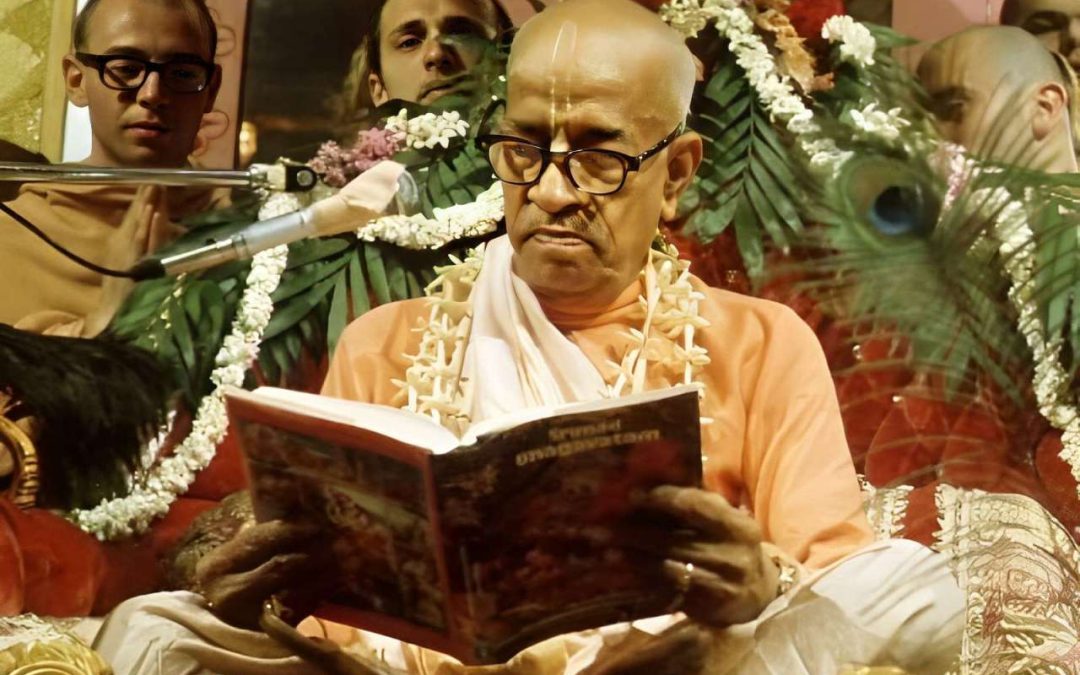
Therefore, Srila Prabhupada asked us to associate with him by discussing his books:
“I am therefore so much laboring hard that we…, before my leaving this body, I may give you some books who you can enjoy after my death. So utilize it. Utilize it. Read every śloka nicely, try to understand the meaning, discuss amongst yourself. Nityaṁ bhagavata-sevayā. That is our mission.” Lecture 1972
Reading Srila Prabhupada’s books alone is insufficient for sadhu sanga to take effect.
“Simple hearing is not all; one must realize the text with proper attention. The word niviṣṭa means that Sūta Gosvāmī drank the juice of Bhāgavatam through his ears. That is the real process of receiving Bhāgavatam. One should hear with rapt attention from the real person, and then he can at once realize the presence of Lord Kṛṣṇa in every page. The secret of knowing Bhāgavatam is mentioned here. No one can give rapt attention who is not pure in mind. No one can be pure in mind who is not pure in action. No one can be pure in action who is not pure in eating, sleeping, fearing and mating. But somehow or other if someone hears with rapt attention from the right person, at the very beginning one can assuredly see Lord Śrī Kṛṣṇa in person in the pages of Bhāgavatam.” Srimad Bhagavatam 1.3.44 purport
Reading by ourselves can result in a faulty understanding and application of devotional service. Therefore, Srila Prabhupada kindly gives us a transcendental ‘cheat hack’ by which we can properly understand and apply Krishna consciousness.
“Generally, people cannot understand. But if one understands, he becomes liberated. If some way or other… It is not very difficult; simply we have to associate with devotees and discuss this literature. Then we’ll understand Kṛṣṇa very easily.” Lecture 1976
In summary, proper sadhu sanga has two main elements: we must read Srila Prabhupada’s books, for he is the bona fide spiritual master, and we must discuss those books to understand them properly. Srila Prabhupada gives many instructions on how such discussions should be conducted.
Correct sadhu sanga requires training:
“ …unless and until one is trained in the culture of good association, one cannot become good.” SB 3.3.6 purport
“In order to become really learned, we have to associate with devotees. Then we can actually relish kṛṣṇa-kathā. When discussed among devotees, kṛṣṇa-kathā is pleasing to the heart and ear. This requires a little training, and this training is given by the devotees.” Teachings of Lord Kapila, chapter 12; texts 25-26
“One should learn how to associate with the devotees of the Lord by gathering with them to chant the glories of the Lord. This process is most purifying. As devotees thus develop their loving friendship, they feel mutual happiness and satisfaction. And by thus encouraging one another, they are able to give up material sense gratification, which is the cause of all suffering. The devotees of the Lord constantly discuss the glories of the Personality of Godhead among themselves. Thus they constantly remember the Lord and remind one another of His qualities and pastimes. In this way, by their devotion to the principles of bhakti-yoga, the devotees please the Personality of Godhead, who takes away from them everything inauspicious. Being purified of all impediments, the devotees awaken to pure love of Godhead, and thus, even within this world, their spiritualized bodies exhibit symptoms of transcendental ecstasy, such as standing of the bodily hairs on end.” Srimad Bhagavatam 11.3.30-31
Only by such correct sadhu sanga can we understand how to steadily advance in devotional service.
“In the association of pure devotees, discussion of the pastimes and activities of the Supreme Personality of Godhead is very pleasing and satisfying to the ear and the heart. By cultivating such knowledge one gradually becomes advanced on the path of liberation, and thereafter he is freed, and his attraction becomes fixed. Then real devotion and devotional service begin. Thus consciously engaged in devotional service in the association of devotees, a person gains distaste for sense gratification, both in this world and in the next, by constantly thinking about the activities of the Lord. This process of Kṛṣṇa consciousness is the easiest process of mystic power; when one is actually situated on that path of devotional service, he is able to control the mind.” Srimad Bhagavatam 3.25.25-26
If we are doing things correctly, we should feel happy.
“If a person is actually executing devotional service, then he must be happy. If he’s not happy, then he’s not doing properly.” Lecture 1968
This knowledge of the goal and methods of bhakti is essential, and it should develop at the stage of sadhu sanga, before initiation.
“Initiation or no initiation, first thing is knowledge. [break] …knowledge. Initiation is formality.” Press Interview 1976
Srila Prabhupada asked the GBC to ensure every devotee regularly engages in good quality sadhu sanga.
“Your first job should be to make sure that every one of the devotees in your zone of management is reading regularly our literatures and discussing the subject matter seriously from different angles of seeing, and that they are somehow or other absorbing the knowledge of Krishna Consciousness philosophy. If they are fully educated in our philosophy and if they can get all of the knowledge and study it from every viewpoint, then very easily they will perform tapasya or renunciation and that will be their advancement in Krishna Consciousness.” Letter to Satsvarupa Maharaja 1972
Due to a lack of good sadhu sanga, new devotees are often misinformed about how to progress in bhakti. For example, they may think that ‘faking it’ is part of the process of devotional service, or that discussing Srila Prabhupada’s books is ineffective, and one must travel the world to hear from the lips of a living guru. By accepting mistaken ideas that oppose sastra, they cannot progress in bhakti.
“Śrīla Rūpa Gosvāmī therefore says:
śruti-smṛti-purāṇādi-
pañcarātra-vidhiṁ vinā
aikāntikī harer bhaktir
utpātāyaiva kalpate
[Bhakti-rasāmṛta-sindhu 1.2.101]
That is, without references to śruti, smṛti, Purāṇas, and Pañcarātras, unadulterated devotional service is never achieved.” The Science of Self Realization, chapter 3
We acknowledge that the GBC has put in place many educational programmes, but in our view, they do not incorporate the necessary principles of good sadhu sanga. In fact, we feel the GBC has impeded the practice of good sadhu sanga through their initiation polices. By creating a category of ‘initiating gurus’ the GBC mark these devotees out as being specially qualified, much more so than anyone who is not so designated. This makes it difficult to question possible misunderstandings these gurus may have without being considered offensive. Since all conditioned souls, up to the stage of bhava, are still prone to making mistakes, cheating, faulty senses and illusion, it is inevitable some of these officially designated ‘ISKCON gurus’ will demonstrate some or more of these faults at some point. However, because they have been designated as ‘ISKCON gurus’ rank and file devotees assume everything they say and do is perfect. It takes some disastrous scandal to expose their fallibility. In the meantime, many people have been misled or lost their faith. If they had not been artificially placed above all others, and if Improving Sanga were an integral part of ISKCON’s culture, perceived misunderstandings could be openly discussed and collaboratively corrected. Unfortunately, our experience at present is that even non-initiating GBC members are disinclined to discuss with devotees who question their point of view, often considering differing perspectives as an offensive challenge to their ‘ultimate authority’. However, Srila Prabhupada encourages such discussions.
“Devotees always humbly offer respect to everyone, but when there is a discussion on a point of sastra, they do not observe the usual etiquette, satyam bruyat priyam bruyat. They speak only the satyam, although it may not necessarily be priyam.” Letter to Srimati Morarjee
Bhajana kriya
“Bhajana-kriyā means to be engaged in the service of the Lord.” Lecture 1972
In the purport to Bg 4.10, Srila Prabhupada says that at the stage of bhajana–kriya “one becomes initiated by an elevated spiritual master.” Often, we understand this to mean accepting formal diksa. However, the essence of initiation means taking to the process prescribed by the bona fide spiritual master, Srila Prabhupada.
“Now, the initiation means beginning of the activities. Beginning of the activities. How one can develop Kṛṣṇa consciousness to the perfectional state, that is called initiation. It is not that initiation means finished. It is the third stage. Then the fourth stage will be, one who is initiated, if he follows the rules and regulation, and if he chants Hare Kṛṣṇa with a fixed-up counting, then gradually his all misgivings will vanish.” Lecture 1968
“First of all you have to decide whether you will abide by the rules and regulation and become Kṛṣṇa conscious. That is your consideration. You have to think yourself whether you are going to take seriously this Kṛṣṇa consciousness. It is your decision. Initiation is formality. If you are serious, that is real initiation. So if you have understood the Kṛṣṇa philosophy, and if you have decided that you will take Kṛṣṇa consciousness seriously and preach the philosophy to others, that is your initiation. My touching is simply formality. It is your determination that is initiation.” Room Conversation 1972
Bhajana kriya for the three celibate ashramas (brahmacaris, vanaprasthas and sannyasis) generally includes rising early, attending mangala artika and the other morning and evening temple programmes, chanting 16 rounds of japa, attending temple classes, refraining from the four prohibitions, going out preaching, worshipping the deities, istagosthis, etc. We should note how Srila Prabhupada defines istagosthi, which is widely and mistakenly thought to mean managerial style meetings.
“For a devotee, there is no point in making friendships with ordinary persons; he should make friendship with other devotees so that by discussing among themselves they may elevate one another on the path of spiritual understanding. This is called iṣṭa-goṣṭhī.” SB 3.29.17 purport
“So these are within the bhajana-kriyā. Early rising early in the morning, offering mangala-ārati…” Conversation 1972
“Just like devotional program we have got. Bhajana-kriyā. This is called bhajana-kriyā. One cannot be slack in the process of devotional service. Then it will be… Vidhi-mārga, the regulative principles = chant sixteen rounds, rise early in the morning, have maṅgala-ārātrika, read books, take your bath—these are the process. Bhajana-kriyā. Bhajana means devotional service, and kriyā…” Morning Walk 1974
“This arcana-vidhi is one of the items of bhajana, bhajana-kriyā.” Lecture 1972
The bhajana kriya Srila Prabhupada recommended for householders is slightly modified as follows:
“One need only chant Hare Kṛṣṇa, Hare Kṛṣṇa, Kṛṣṇa Kṛṣṇa, Hare Hare/ Hare Rāma, Hare Rāma, Rāma Rāma, Hare Hare, accept the remnants of foodstuffs offered to Kṛṣṇa, have some discussion on books like Bhagavad-gītā and Śrīmad-Bhāgavatam, and engage oneself in Deity worship. These four things will make one happy. One should train the members of his family in this way. The family members can sit down morning and evening and chant together Hare Kṛṣṇa, Hare Kṛṣṇa, Kṛṣṇa Kṛṣṇa, Hare Hare/ Hare Rāma, Hare Rāma, Rāma Rāma, Hare Hare. If one can mold his family life in this way to develop Kṛṣṇa consciousness, following these four principles, then there is no need to change from family life to renounced life.” Bg 13.8-12 purport
Unfortunately, due to incorrect sadhu sanga, many temple devotees neglect regular isthagosthis and the evening programme, especially the Bhagavad-gita class, and householders tend to neglect the bhajana prescribed for them, at best performing maybe one or two of the items. The discussions are nearly always left out. Furthermore, temple classes are frequently monologues with little or no opportunity for scriptural assimilation.
According to Srila Vishvanatha Cakravarti Thakura, bhajana kriya has two divisions: steady and unsteady. He describes six stages of unsteady bhajana kriya.
“Bhajana–kriya is divided into two parts: anishthita (unsteady) and nishthita (steady). When devotional activities are performed on the nishthita platform, there is no fear of deviation or lethargy. Anishtita (unsteady devotional service) is further divided into six gradations:
- Utsahamayi (sudden enthusiasm)
- Ghana–tarala (sometimes enthusiastic, sometimes lethargic)
- Vyudha–vikalpa (a stage when doubts assail one’s resolve)
- Vishaya–sangara (a stage of internal tug-of-war with material sense enjoyment)
- Niyamakshama (although one practises regularly, full justice is still not done to the process)
- Taranga–rangini (attachment to wealth, adoration, distinction and so on).” (Madhurya Kadambini, Second Shower)
Unfortunately, many ISKCON devotees take initiation at the utsahamayi stage of unsteady bhajana kriya. This is a mistake because at this stage, we cannot maintain our initiation vows, and breaking them is an offence which impedes our progress.
“But if people, after promising everything, and break their promise, that is very abominable. When they’re initiated before the Deity, before the Lord, before the fire, they should not break it. That is most sinful if you break your promise. Otherwise, you should not be coming forward for initiation if you cannot keep your promise…..” Lecture 1974
“So this is the warning. Once you are initiated on the promise that you shall not do these all nonsense, then you remain perfectly in goodness. Mām eva ye prapadyante māyām etāṁ taranti. Māyā cannot do anything. But if you cheat yourself, cheat your spiritual master, cheat God, then you will be cheated by māyā.” Lecture 1972
Sometimes devotees cite Bhagavad-gita 9.30 to excuse fall-downs. However, this verse is not a free pass to regularly break initiation vows:
“Hṛdayānanda: [translating] When one breaks the principles, can Kṛṣṇa forgive him?
Prabhupāda: Yes, Kṛṣṇa can forgive you once, twice—not regularly.” Lecture 1975
If we avoid offences by not making vows we cannot keep, even unsteady bhajana kriya will gradually purify us. This purification is called anartha nivritti.
Anartha Nivritti
In our pure state, the soul has prema, love for Krishna, characterised by the exclusive desire “to please the senses of Lord Krishna”. (CC Adi 4.165) However, in conditioned life, our original prema transforms into lust, a desire to gratify our own senses. All such selfish desires, including the desire for liberation, are anarthas, unwanted. These must be gradually removed from the heart.
Anartha nivritti “… is a gradual process, not that one becomes immediately purified.” Lecture 1970
According to Madhurya Kadambini, third shower, these unwanted desires can be divided into four categories (see Sages of Naimisharanya, Appendix 3). Unwanted desires arising from:
- Past sinful activities.
- Past pious deeds.
- Offences to the Holy Name.
- The performance of devotional service.
Regarding unwanted desires arising from devotional service, Srila Prabhupada writes:
“When a person advances in devotional service, it is natural that many persons will come to him requesting to become disciples and will offer him some material gains. If one is attracted by a large number of disciples offering material conveniences and forgets his duty as a bona fide spiritual master, the growth of the plant will be impeded. Simply by taking advantage of material conveniences one may become addicted to enjoying material comforts…Other impediments are to desire liberation or material name and fame by discharging devotional service, or to neglect the prohibitions.” Teachings of Lord Chaitanya, chapter One.
The Madhurya Kadambini, third shower, categorises anartha nivritti into five stages:
- Partially,
- Substantially,
- Almost completely,
- Completely,
- Absolutely thoroughly.
(Please note that the distinction between complete and absolute eradication of anarthas is as follows: At the complete stage, there are no anarthas left in the heart, but they can return. In the Absolute stage, which occurs at an advanced stage of prema known as sthayi bhava, there is no chance the anarthas will ever recur: “When one actually becomes situated on the transcendental platform, he becomes steady. Unless one is so situated, his position is not steady and he may fall down. When one is actually situated transcendentally, there is no fear of falling down. This stage is technically called sthāyi-bhāva.” Teachings of Lord Caityana, chapter 1 )
In the stage of unsteady bhajana kriya, the unwanted desires are only partially destroyed. However, if we do sadhu sanga properly, we should feel happy.
“So if I am actually rendering devotional service and I’m not getting any happiness, that means there is some māyā’s play. Otherwise there is no such reasoning. He must feel happy. Then he has to rectify the process of his service. Not to change, but rectify the process.” Lecture 1968
As we continue practising to the best of our ability, the heart becomes purified until we reach the stage of steady devotional service, known as nishtha.
Nishtha
At the nishtha stage, the anarthas are substantially destroyed, and one can steadily execute uninterrupted bhajana–kriya. One should not accept formal initiation before nishtha.
“One who is not self-controlled, specifically in sex life, can become neither a disciple nor a spiritual master.” SB 2.9.43 purport
However, as the anarthas are still not entirely eradicated, we must continue to engage in sadhu sanga, otherwise, we will fall from our practice. If we neglect discussing the Bhagavad-gita and Srimad Bhagavatam, we can fall even after reaching the more advanced stages of bhakti: ruchi, ashakti, bhava and even the beginning of prema, what to speak of nishtha.
“When bhajana-kriya gains maturity it turns to nistha, or steadiness……In this stage of development the mitigation of anarthas is substantial….; thereafter, on the platform of rati….the unwanted desires in the heart are almost completely absolved….With the first awakening of prema, or divine love, these anarthas are completely removed…..Finally, the anarthas are totally uprooted….when the devotee receives the mercy and shelter of the Lord’s lotus feet.” Madhurya Kadambini, third shower.
Even at the elevated stage of bhava, Bharata Maharaja made a mistake and thus took birth as a deer in his next life. It is hardly surprising, then, that ISKCON’s GBC members and initiating gurus have made mistakes. This is understandable and expected of any devotee, up to and including those at the initial stage of prema. The antidote to such mistakes is to regularly discuss Srila Prabhupada’s books as he instructed.
Conclusion
In conclusion, correct sadhu sanga is essential at every stage of bhakti, up to and including prema.
“The root cause of devotional service to Lord Kṛṣṇa is association with advanced devotees. Even when one’s dormant love for Kṛṣṇa awakens, association with devotees is still most essential.” CC M 22.83
Considering that correct sadhu sanga is vital to our individual and institutional success, we humbly appeal to the GBC to stop officially designating certain devotees as genuine sadhus. We suggest you place a temporary moratorium on initiations and focus on training all ISKCON devotees, beginning with the leadership, in the 10 Improving Sanga Principles. Ensure that all ISKCON leaders prioritise and teach these Principles to the temple devotees and congregation members. Once the culture of good sadhu sanga is firmly rooted in ISKCON’s culture, allow formal initiations to occur organically.
We also appeal to all our readers to take full responsibility for your own spiritual advancement. Even if your authorities do not focus on Improving Sanga, do not let that stop you from making the adjustments you need to succeed. We invite you to join our community and learn how to apply the ten Improving Sanga Principles. If you cannot do that, at least start regularly listening to Srila Prabhupada’s lectures.
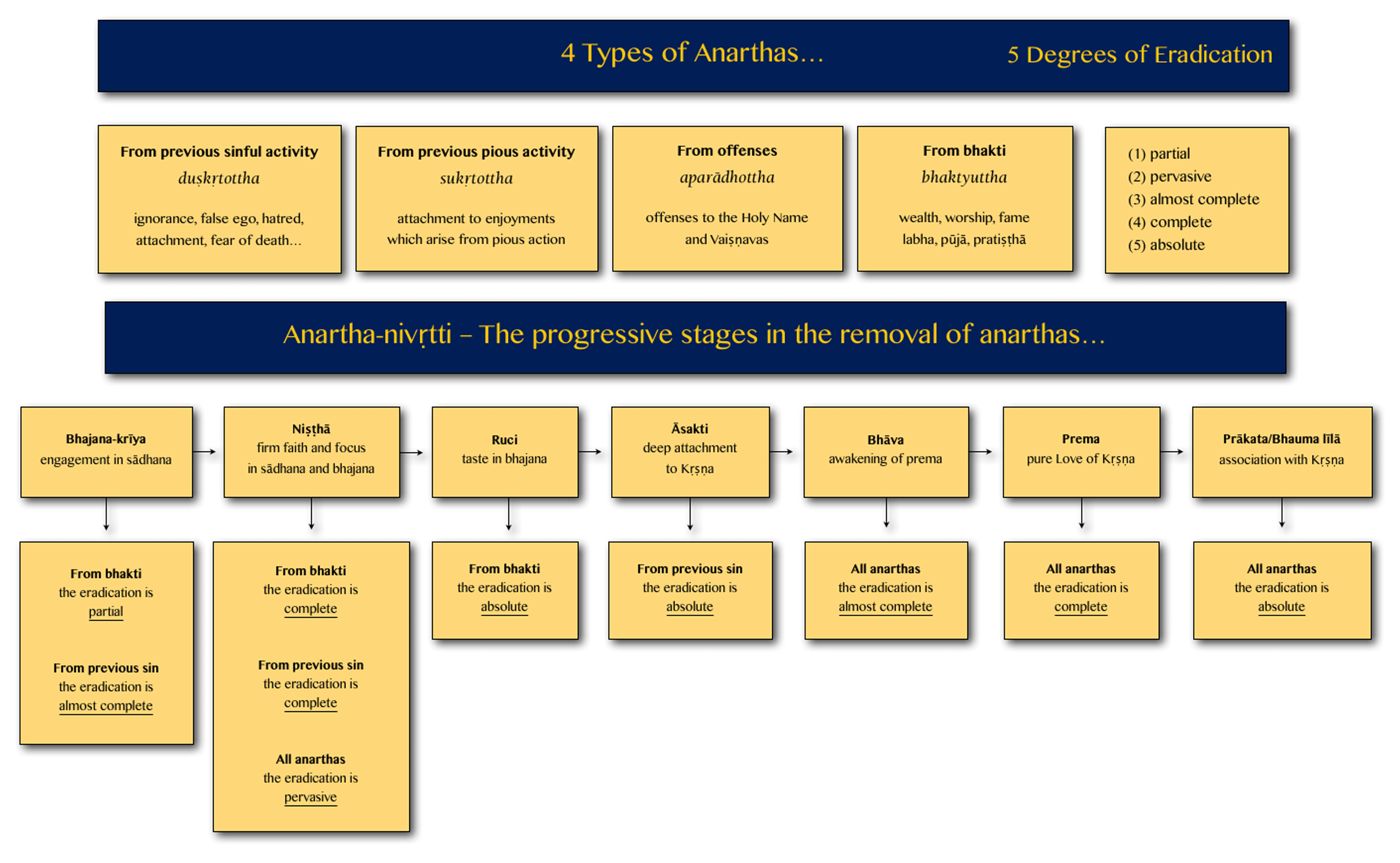
Credit to HG Uttamasloka Das Adhikari (ACBSP), author of The Realisation and Manifestation of Your Eternal Identity.

0 Comments