

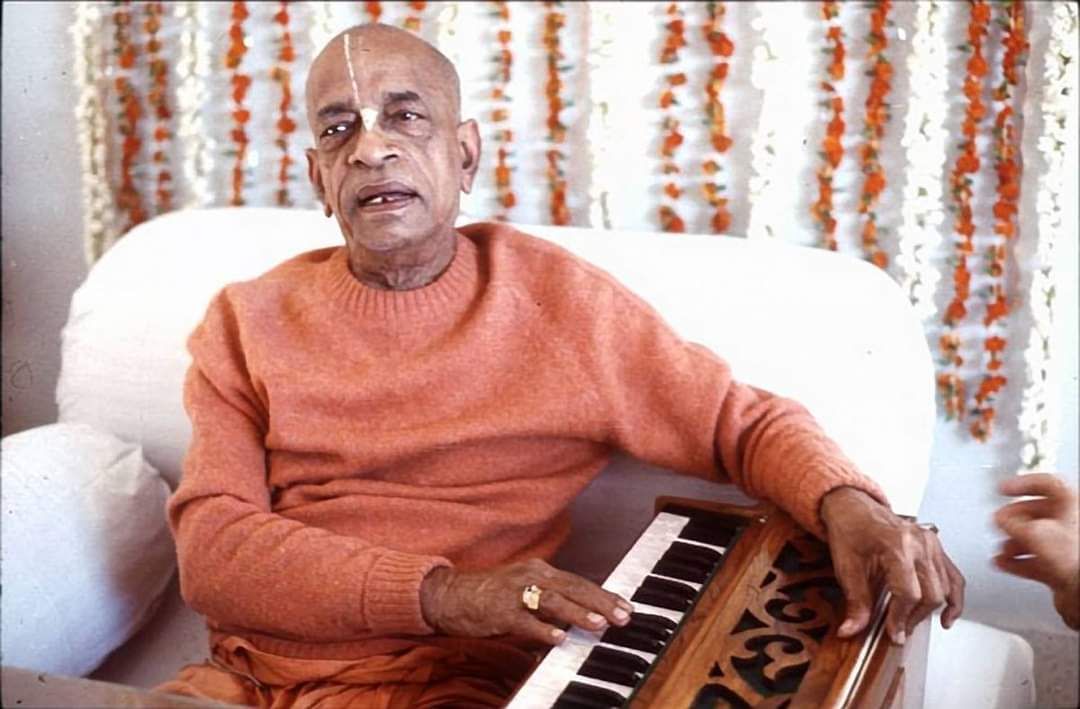
“So two things must be correct: the guru must be correct and the disciple must be correct. Then the business will be correct. And either of them—if guru is incorrect or the disciple is incorrect—there will be no action.” Lecture 1973
The Bona fide Guru
The minimum qualifications for being a spiritual master are:
- Sense control,
- Correctly understanding the science of Krishna consciousness,
- Always citing scripture to support their statements,
- Not seeking material benefit from being a guru.
Sense Control:
“The so-called spiritual master without sense control is certainly the cheater, and the disciple of such a so-called spiritual master is the cheated.” SB 2.9.43 purport
“This is instruction, that anyone who has become competent to control the tongue, to control the mind, to control the anger, to control the belly and control the genital, if six kind of control is there, he is fit for becoming spiritual master; he can make disciples all over the world. And if you cannot control your tongue, if you [cannot] control your anger, control your mental concoction, then how you can become even a spiritual master? That is not possible.” Lecture 1973
“I cannot control even my tongue and control my genital, and I become spiritual master? This is nonsense. This is nonsense. You learn first of all. Try to control. Become first-class controller, dhīraḥ. That is called dhīraḥ: not disturbed by any urges… Unless you become dhīraḥ, you cannot understand what is spiritual life.” Lecture 1974
Correctly understanding the science of Krishna consciousness:
“Whether one is a brāhmaṇa, a sannyāsī or a śūdra — regardless of what he is — he can become a spiritual master if he knows the science of Kṛṣṇa.” CC Madhya 8.128 verse
“So when there is misinterpretation, he’s not a bona fide spiritual master. He’s not spiritual master, what is called a bona fide.….Reject him immediately. That intelligence you must have, who is a pseudo spiritual master or real spiritual master. Otherwise you’ll be cheated.” Lecture 1968
“Unqualified guru means who does not know how to guide the disciple. Guru’s duty is to guide. So such kind of guru can be at least rejected. … A guru who does not know what to do and what not to do, but by mistake, by mistakenly I have accepted somebody as guru, he can be rejected. By rejecting him, you can accept actual bona fide guru.” Lecture 1973
Give scriptural evidence:
“Nowadays it has become a fashion, everyone is becoming guru and he is giving his own opinion, “I think,” “In my opinion.” That is not guru. Guru means he should give evidences from śāstra. Yaḥ śāstra-vidhim utsṛjya vartate kāma-kārataḥ [Bg. 16.23] = “Anyone who does not give evidences, proof, from the śāstra, then” na siddhiṁ sa avāpnoti, “he does not get at any time success,” na sukham, “neither any happiness in this material world,” na parāṁ gatim, “and what to speak of elevation in the next life.” These are the injunction.” Lecture 1975
“The teacher cannot manufacture rules against the principles of revealed scriptures….thus the leader’s teaching should be based on the principles of such standard sastras.” Bg 3.21 purport
“So the spiritual master, even if you take that he is conditioned soul, but he does not speak anything from his own side. He speaks from Kṛṣṇa’s side. So unless… The Vedic principle is that unless one is not liberated from the material conditions, he cannot give us any perfect knowledge. The conditioned soul, however he may be academically advanced, educated, he cannot give us any perfect knowledge. Only one who is above the condition of these material laws, he can give us the perfect knowledge.” Lecture 1968
Does not try to materially benefit from being a guru.
“One should not become a spiritual master for one’s personal benefit, for some material gain or as an avenue of business or occupation for earning livelihood. Bona fide spiritual masters who look unto the Supreme Lord to cooperate with Him are actually qualitatively one with the Lord, and the forgetful ones are perverted reflections only.” SB 1.13.48 purport
Different Types of Guru
Regarding different types of spiritual masters, Srila Prabhupada writes the following in Easy Journey to Other Planets, chapter 1:
- The serious candidate must accept a bona fide spiritual master in order to be trained scientifically. Because the senses are material, it is not at all possible to realize the Transcendence by them. Therefore the senses have to be spiritualized by the prescribed method under the direction of the spiritual master.When the student has chosen a bona fide spiritual master, he must take the proper initiation from him. This marks the beginning of spiritual training.
- The candidate must be prepared to satisfy the spiritual master in every way. A bona fide spiritual master who is fully cognizant of the methods of spiritual science, learned in the spiritual scriptures such as the Bhagavad-gita, Vedanta, Srimad Bhagavatam and Upanisads, and who is also a realized soul who has made a tangible connection with the Supreme Lord, is the transparent medium by which the willing candidate is led to the path of the Vaikunthas. The spiritual master must be· satisfied in all respects, because simply by his good wishes, a candidate can make wonderful progress along the path.
- The intelligent candidate places intelligent questions to the spiritual master in order to clear his path of all uncertainties. The spiritual master shows the way, not whimsically, but in accordance with the principles of the authorities who have actually traversed the path. The names of these authorities are disclosed in the scriptures, and one has simply to follow them under the direction of the spiritual master. The spiritual master never deviates from the path of the authorities.
- The candidate should always try to follow in the footsteps of the great sages who have practiced the method and obtained success. This should be taken as a motto in life. One should not superficially imitate them, but should follow them sincerely in terms of the particular time and circumstances.
- The candidate must be prepared to change his habits in terms of the instructions contained in the books of authority, and for the satisfaction of the Lord he must be prepared to sacrifice both sense gratification and sense abnegation, following the example of Arjuna.
- The candidate should live in a spiritual atmosphere.
- He must be satisfied with as much wealth as is sufficient for maintenance only. He should not try to amass more wealth than is necessary to sustain himself in a simple way.
- He must observe the fasting dates, such as the eleventh day of the growing and waning moon.
- He must show respect to the banyan tree, the cow, the learned brahmana and the devotee.
These are the first stepping-stones toward the path of devotional service. Gradually one has to adopt other items, which are negative in character:
- One should avoid offenses in the discharge of devotional service and in chanting the holy names.
- He should avoid extensive association with nondevotees.
- He must not take on unlimited disciples. This means that a candidate who has successfully followed the first twelve items can also become a spiritual master himself, just as a student becomes a monitor in class with a limited number of disciples.
- He must not pose himself as a vastly learned man simply by quoting statements in books. He must have solid knowledge of the necessary books without superfluous knowledge in others.
- A regular and successful practice of the above fourteen items will enable the candidate to maintain mental equilibrium even amidst great trials of material loss and gain.
- In the next stage, the candidate does not become afflicted by lamentation and illusion.”
The topmost spiritual master’s role is critical.
Item 3 of the above list gives the qualifications of the topmost spiritual master who has an established relationship with Krishna and whom we must please to attain Krishna’s mercy. All ISKCON devotees will agree that Srila Prabhupada is such a spiritual master. Since scripture recommends hearing from the topmost devotee, we humbly urge everyone to listen to Srila Prabhupada’s lectures and study his books.
“In this verse it is recommended (yogeśvara-upāsanayā) that one serve the lotus feet of the topmost yogī, or the devotee. To serve the topmost devotee means to hear from him about the glories of the Supreme Personality of Godhead. To hear the glories of the Supreme Personality of Godhead from the mouth of a pure devotee is to acquire a pious life.” Srimad Bhagavatam 4.22.22 purport
“…one has to associate with liberated persons not directly, physically, but by understanding, through philosophy and logic, the problems of life.” Srimad Bhagavatam 3.31.48 purport
The less qualified guru
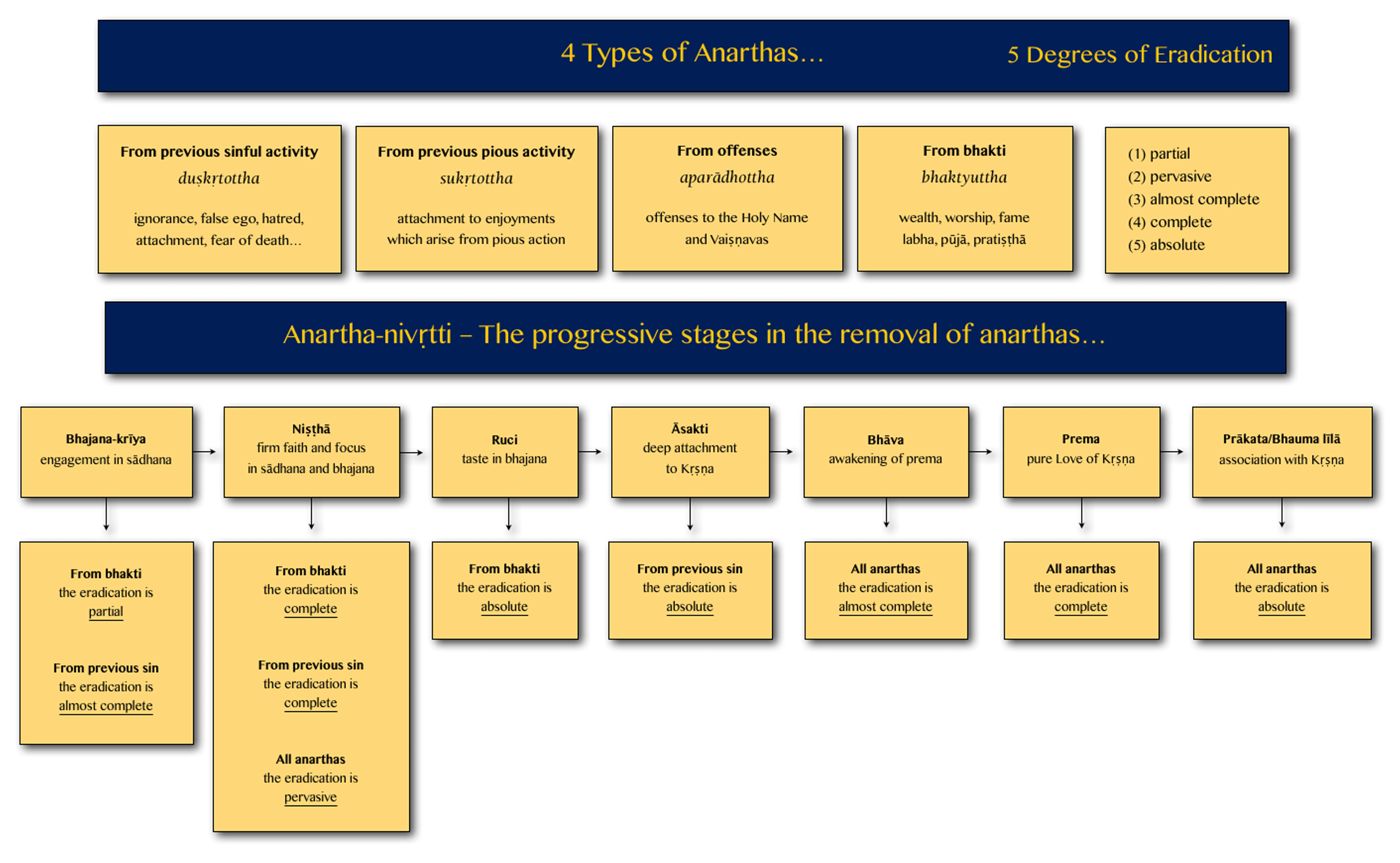
As stated in point 13, if the spiritual candidate successfully attains the first twelve qualifications, he can accept a “limited number” of disciples. We understand that by fulfilling the first 12 items, the disciple attains the stage of nishtha. From this point, one can accept disciples, but the role differs from that of the topmost guru. Srila Prabhupada compares this less qualified guru to a ‘monitor in a class’ who helps his disciples understand the topmost spiritual master’s teachings. Srila Prabhupada hoped that all his followers would seriously study and discuss his books and attain this stage of nishtha.
“Lord Chaitanya wanted everyone should be a spiritual master provided he follows the order of Lord Chaitanya….Anyone following the order of Lord Chaitanya under the guidance of his bona fide representative, can become a spiritual master and I wish that in my absence all my disciples become the bonafide spiritual master to spread Krishna consciousness throughout the whole world. I want it…” Letter to Madhusudan
It follows that if one can accept disciples at the stage of nishtha, those at the higher stages of ruchi, ashakti, bhava and prema can also do so.
THE BONA FIDE DISCIPLE
The spiritual candidate qualified to take initiation must have at least three qualities: knowledgeable (as opposed to fanatical or speculative); sense-controlled, and inquisitive to understand the scripture.
Knowledgeable:
“Initiation or no initiation, first thing is knowledge.” Press Interview 1976
“You should be religious, but should understand everything philosophically, not… Otherwise one becomes fanatics, religious fanatics……So we should not become religious fanatics, nor dry mental speculators. Both these classes of men are dangerous. They cannot make any advance. The combination. You should be religious, but try to understand each and every line philosophically.” Lecture 1968
Sense controlled:
“Without becoming a gosvāmī one can become neither a disciple nor a spiritual master.” Srimad Bhagavatam 2.9.43 purport
Sense control requires that we fully and uninterruptedly follow the four prohibitions and the positive practices of bhajana kriya. Trying to follow and following are separate stages. At the stage of unsteady bhajana kriya we try to follow. At the stage of nishtha, we do follow. For example, while practising unsteady bhajana kriya, we try to avoid illicit sex but may still be prone to slip and engage in it; another example is that at the stage of unsteady bhajana kriya we may refrain from gambling with money, but gamble with our lives by engaging in asat sanga activities such as watching films, reading non-devotional books, or scrolling through social media.
“There is no stronger obstruction to one’s self-interest than thinking other subject matters to be more pleasing than one’s self-realization.” SB 4.22.32 Verse
It takes time and the proper practice of sadhu sanga to progress from unsteady bhajana–kriya to nishtha. If we take formal initiation before mastering our senses, our initiation is meaningless:
“So those who are going to be initiated, they should take it as a vow not to fall down again. Catch Kṛṣṇa’s lotus feet very tightly and you’ll not fall down….. So be determined. Don’t make it a farce…So you are welcome to take initiation, but if you are neglectful, if you want to make it a farce, that is your business. I cannot give you any protection.” Lecture 1974
“Śrīla Rūpa Gosvāmī warns, however, that if a person is properly initiated by a bona fide spiritual master, he should not think that simply by the acceptance of such initiation his business is then finished. One still has to follow the rules and regulations very carefully. If after accepting the spiritual master and being initiated one does not follow the rules and regulations of devotional service, then he is again fallen.” NoD chapter 5
Inquisitive to Understand Scripture:
“The bona fide disciple should be inquisitive to understand transcendental subject matter…… and he should no longer be interested in material topics. His only interest should be Kṛṣṇa, the Supreme Personality of Godhead……..One who is inquisitive to understand the highest goal and benefit of life must approach a bona fide spiritual master and surrender unto him.” A serious disciple must be alert when selecting a bona fide spiritual master. He must be sure that the spiritual master can deliver all the transcendental necessities.” CC M 24.330 purport
“Generally people are very interested in inquiring about mundane subject matters, but when one has lost such interest and is simply interested in transcendental subject matters, he is quite fit for being initiated.” Nectar of Instruction, text 5
“So jijnasuh sreya uttamam, what is the highest perfection of life, he requires to approach a guru. It is not a fashion. It is not a fashion that “I have made my guru, such and such Swami.” But what you have learned? You cannot learn because you are not at all jijnasuh. You do not know how to inquire, neither the guru you have met, he does know how to reply. Such kind of guru and disciple will not help. The disciple must be also serious to understand about the spiritual subject matter. That is knowledge, brahma-jijnasa. One who is inquisitive to know about the Absolute Truth, he requires to approach a guru.” Lecture 1973
“If you have no such view to inquire what is the ultimate goal of your, you need not require to search out a spiritual master. Spiritual master is not a show bottle. Just like, “Oh, so many people, they have got a spiritual master. Let me have also some spiritual master.” It is not like that. It is only jijnasuh, one must be very much inquisitive of the transcendental subject matter. He requires a spiritual master.” Lecture 1966
THE BONA FIDE GURU-DISCIPLE RELATIONSHIP
Accepting a Spiritual Master:
“…As soon as you accept somebody as spiritual master, you cannot argue. You have to accept. You have to accept. Therefore the selection of spiritual [master] must be very scrutinizing. You cannot accept anyone as spiritual master. You must be very much satisfied that here is a person who can solve the problems of my life. Just like Arjuna thought. He plainly said that “The problem which is before me, I know, beyond You, besides You, nobody can make solution.” That is the way of accepting spiritual master. When one is fully convinced that, “Here is a person who can actually solve the problems of my life,” then one should accept spiritual master. In the Hari-bhakti-vilāsa there is such process that one should accept a spiritual master after associating with him for some time. Similarly, the spiritual master also shall accept somebody as disciple after associating with him for some time, whether he is eligible or not. This is the process.” – Lecture 1968
Insights from Narahari Sarakara Thakura’s book, Sri Krishna Bhajanamrita:
From the following, we understand that in ISKCON, we should offer greater respect to Srila Prabhupada than to other initiating gurus, not just in terms of formal respect but also in prioritising Srila Prabhupada’s instructions over those of others.
“Verse 30
However all those practicing Vaisnavas progressing on the path of devotional service, who have heard and understood the conclusion of the revealed sastras and are therefore endowed with special intelligence are able to recognize who is more spiritually powerful and who is less spiritually powerful. Those who are expert in the science of devotional service can understand in whose body what quantity of Krsna’s spiritual potency is present. Being able to understand who has less spiritual potency and who has more spiritual potency, they offer special treatment considering the scriptural injunctions in this regard.
Verse 31
If one can distinguish between the greater or lesser spiritual strength of a person but does not accordingly offer respect, then that person shall be held guilty for that offense.
Verse 32
For the reason mentioned before, if two Vaisnavas come at the same time, one of greater strength, one of lesser spiritual strength, first one has to offer respect to the Vaisnava of greater strength then offer to the Vaisnava of lesser strength.
Verse 33
Should the respect due to a Vaisnava of greater strength or to a Vaisnava of lesser strength be offered at the same level if they come at a different time? Equal respect should not be offered to both even if they are not present at the same time.”
If one has taken initiation from a guru who deviates from Srila Prabhupada’s teachings, one should have sufficient knowledge to respectfully correct him.
Verse 59
If the spiritual master commits a wrongful act breaking Vaishnava regulative principles, then in that case one should, in a solitary place, confront him for his rectification using logic and appropriate conclusions from sadhu, sastra and guru references, but one is not to give him up.
Verse 60
One should not be hesitant or fearful because one is confronting or challenging a spiritual master. “For it has been prescribed that one must appropriately discipline even a spiritual master who is: *bewildered about what he should or shouldn’t do; *who is inexperienced or ignorant: *who has deviated from the Krsna conscious path; *or if he is bewildered by false pride.”
If one’s initiating spiritual master is not rectified, one should leave him and follow Srila Prabhupada’s instructions until a qualified teacher is found.
Verse 64
However, if the spiritual master: *acts envious towards ‘isvarebrantah’, that which is connected with the Supreme; *is bewildered regarding the Supreme Personality ofGodhead;*is averse to expanding the fame of Lord Krsna;*personally refuses to accept hearing or chanting about the glorious pastimes of Lord Sri Krsna;*has become totally bewildered, listening to the false praise of ignorant persons and day by day is more materially contaminated and fallen___then the spiritual master must be renounced.
Verse 65
Under those circumstances one should not doubt, “How can I give up my spiritual master?” With a strong desire for achieving spontaneous devotional service and attaining the lotus feet of Lord Krsna, the Supreme Personality of Godhead, a devotee accepts the shelter of a spiritual master, if that spiritual master takes on “asuric” qualities or a demoniac mentality then it is one’s duty to reject such a demon “asura” guru and in his place accept a Krsna conscious spiritual master and worship him.
Conclusion
In summary, we humbly suggest that the GBC concentrate on improving all ISKCON devotees’ sadhu sanga by implementing the 10 principles of Improving Sanga, thereby ensuring that everyone properly assimilates the science of Krishna consciousness. This will qualify them to select and, if necessary, reject their guru independent of institutional interference, in accordance with scriptural injunction.
“It is imperative that a serious person accept a bona fide spiritual master in terms of the sastric injunctions. Sri Jiva Gosvami advises that one not accept a spiritual master in terms of hereditary or customary social and ecclesiastical conventions. One should simply try to find a genuinely qualified spiritual master for actual advancement in spiritual understanding.” (Caitanya-caritamrita, Adi 1.35 purport)
“Self-deceived persons sometimes accept leaders or spiritual masters from a priestly order that has been officially appointed by the codes of material life. In this way, they are deceived by official priests.” (Caitanya-caritamrita, Madhya 17.185 purport)
“If you think that “This man, this person, is really authority,” then you surrender there. Otherwise there is no meaning of imitating, that “Oh, so many persons have accepted this person as spiritual master or authority. Oh, let me also accept.” No. Bhagavad-gītā does not say like that. Bhagavad-gītā says that “You try to understand the whole spiritual science very nicely. And if you think the man who is instructing you is actually the authority, then surrender.” Then accept him as spiritual master. Not blindly or dogmatically. Try to understand.” Srimad Bhagavatam lecture 1968

0 Comments