

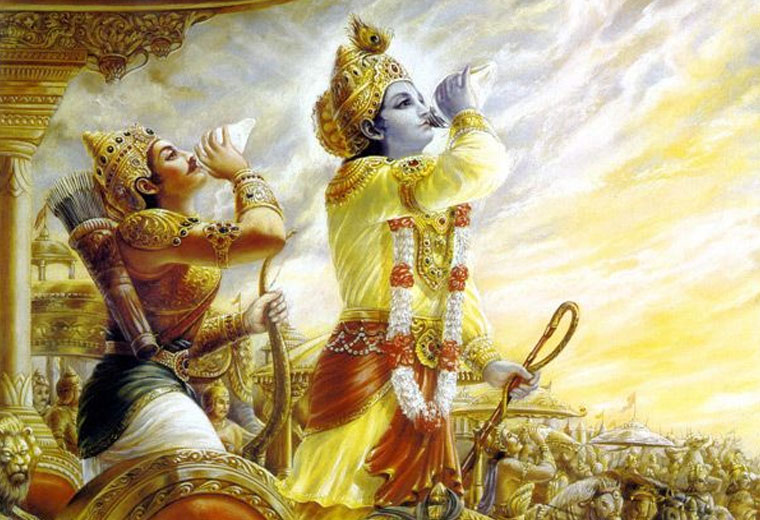
“As in the paddy field the unnecessary plants are taken out, so it is expected from the very beginning of these topics that in the religious field of Kurukṣetra, where the father of religion, Śrī Kṛṣṇa, was present, the unwanted plants like Dhṛtarāṣṭra’s son Duryodhana and others would be wiped out and the thoroughly religious persons, headed by Yudhiṣṭhira, would be established by the Lord.”
Let’s analyse this:
- “As in the paddy field the unnecessary plants are taken out…”:
We understand: A paddy field is arable land which is flooded to grow semi-aquatic crops like rice. To ensure the crop grows properly, the cultivator takes out the weeds.
- “…so it is expected from the very beginning of these topics that in the religious field of Kurukṣetra, where the father of religion, Śrī Kṛṣṇa, was present, the unwanted plants like Dhṛtarāṣṭra’s son Duryodhana and others would be wiped out and the thoroughly religious persons, headed by Yudhiṣṭhira, would be established by the Lord.”
We understand: Similarly, when the cultivator of religion, Lord Krishna, is in the field of religion (dharma-kṣetre), he will remove the irreligious people to ensure the religious people, headed by Yudhisthira, grow strong.
Question: Why would Dhritarastra say dharma-kṣetre, thus suggesting his sons would be destroyed?
Light: He is not intentionally suggesting this. Rather, the goddess of learning, Sarasvati Devi, hints at this through his words. Baladeva Vidyabhusana writes in his commentary on this verse:
“In a field of grains, the weeds which look similar to the grain, but are obstacles to their growth, are eventually pulled out. Similarly, at the field of dharma, your sons, who are but imitations of dharma and opposers of dharma, will also be destroyed.” This is the unintentional, hidden meaning of the word dharma-kshetra (uttered by Dhritarastra himself) by the grace of Sarasvati (skilful in the use of words, giving them a double meaning).”
0 Comments