

Gita Support
Introduction:
Bhagavad-gita is a chapter of the epic Mahabharata, available in both complete and condensed versions.
It is a ‘transcendental mystery’ (Bg 4.3) which Srila Prabhupada told us to discuss from different perspectives.
“And I am very much stressing nowadays that my students shall increase their reading of my books and try to understand them from different angles of vision. Each sloka can be seen from many, many angles of vision, so become practised in seeing things like this.” Letter to Tribhuvanatha das 1972
In Gita Support, we share our understanding in this spirit. It is our attempt to engage in the three primary limbs of bhakti: hearing about, glorifying, and meditating on Krishna, sravanam, kirtanam, visnoh smaranam. These three activities are essential for spiritual growth. We hope and pray that Gita Support will encourage you to also hear, repeat and contemplate the teachings of Bhagavad Gita As It Is. Since we are not self-realised, we have probably not understood everything perfectly. However, we hope Gita Flow will at least inspire you to see the verses as part of a developing message rather than stand-alone aphorisms. If you read passively, you will not derive much benefit. However, if you engage with Gita Support as a discussion partner, by applying the Improving Sanga Principles, we pray it will help encourage and enliven you as you explore the Gita’s messages.
If you use Gita Support to introduce young readers to the Gita, experiment with what works best for them. The best way for each child to engage with the Gita will depend on their intellectual maturity. For young readers, you may want to help them develop their discussion skills and confidence by just working through Gita Support. More intellectually mature readers may prefer to first understand Bhagavad-Gita As It Is, before reading our understandings.
Please be mindful to make your children’s association with the Gita emotionally and intellectually rewarding. We recommend you learn the Improving Sanga Principles to model best practice. Children learn by example more than by precept. Don’t criticise their efforts; instead, model good habits yourself. Always appreciate and encourage them. This will help them associate the Gita with positive experiences and emotions. It doesn’t matter if they don’t understand everything perfectly. It is more important that they develop an attraction for discussing the Gita throughout their lives. This attraction is the best gift we can give our children, for it will bring them under Krishna’s protection.
Further chapters of Gita Flow will be made available to participants of our online or in-person Gita Discussion Groups. To join such a group, please connect with us via our WhatsApp group.
Who’s Who in the Gita:
Dhritarastra: The blind king of the Kurus; father of Duryodhana, and paternal uncle of the Pandavas (sons of Pandu). He ascended the throne after the death of his brother, Pandu, and conspired against his nephews in favour of his own sons, the Kauravas.
Sanjaya: Dhritarastra’s chariot driver and secretary. Vyasadeva blessed him that he would be able to see everything that was going on in the battlefield and relate it to Dhritarastra.
Duryodhana: The eldest son of Dhritarastra who wanted to kill his cousins, the sons of Pandu, and take their kingdom.
Dronacarya: The military teacher of both Pandu’s and Dhritarastra’s sons, as well as the princes of other kingdoms, all of whom fought at Kurukshetra. He reluctantly fought on Duryodhana’s side in the war.
Bhishma: Dhritarastra and Pandu’s eldest brother. He had vowed never to become the king, but to always protect the acting king. Because of his vow, he fought on Duryodhana’s side in the war. As he was significantly older than his brothers, his nephews, the Kauravas and Pandavas, saw him as a grandfather figure.
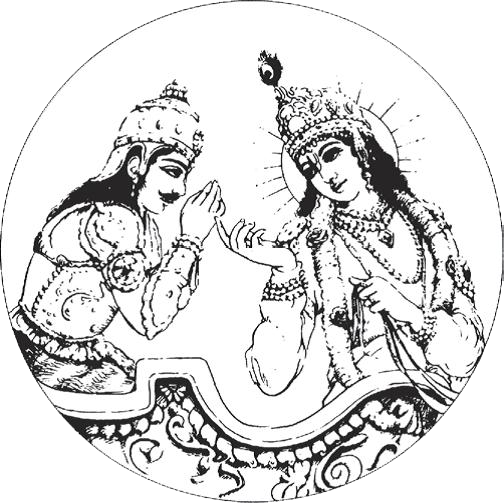
Arjuna: Pandu’s third son, a great warrior and Krishna’s friend and devotee.
Krishna: The Supreme Personality of Godhead who incarnated as a prince in the Yadu dynasty. He acts as Arjuna’s chariot driver and spiritual teacher.
OM TAT SAT
Access Gita Support articles in this series:
Gita Flow – Ch. 1
CHAPTER 1 Gita Flow Note: An asterisk indicates there is an analysis of the verse, which you will find below in the Analyses section. 1.1: Dhritarastra’s question* Dhritarastra asked Sanjaya, “What’s happening at the holy place, Kurukshetra? My...
Gita Flow – Ch. 2
Note: An asterisk at the end of a verse indicates there is evidence related to it, which you will find below in the list of evidences. CHAPTER 2 2.1-3: Krishna scolds Arjuna (1 - 2) Sanjaya said, “When Krishna saw Arjuna so upset about killing his relatives, he said,...
Gita Flow – Ch. 3
Note: An asterisk at the end of a verse indicates there is evidence related to it, which you will find below in the list of evidences. CHAPTER 2 2.1-3: Krishna scolds Arjuna (1 - 2) Sanjaya said, “When Krishna saw Arjuna so upset about killing his relatives, he said,...
Gita Support is a work in progress. We will constantly improve it with time. Please feel free to provide us with your feedback on how we can improve it.
For further study of Bhagavad-Gita we recommend:
- Bhagavad-Gita As It Is with purports by His Divine Grace A. C. Bhaktivedanta Swami Prabhupada
- Gita Bhusana with commentary by Srila Baladeva Vidyabhusana
- Bhagavad-Gita with commentary by Srila Vishvanatha Cakravarti Thakura

6islpf